Alfalfa & Relative Feed Value (RFV)

May 22, 2020


Measuring RFV of Alfalfa

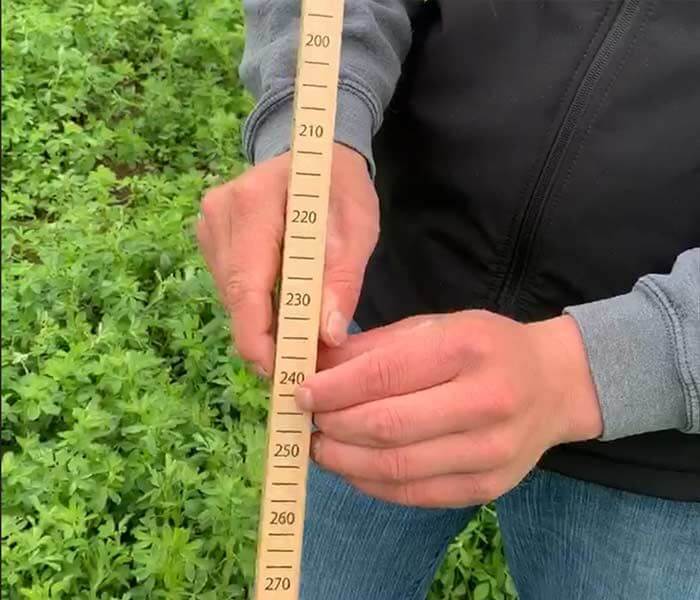
Nutritionist Craig Wagner talks about Relative Feed Value (RFV) and using that information to decide when it's time to start cutting alfalfa.

Our Interactive Alfalfa Map below updates daily with information on how alfalfa is maturing throughout the region.

How to use it:

Use the filters on the left side to change the date range and maturity of the stands whose data you are viewing.

To view how height and maturity have changed over time in a region, right click on the town or county of interest to you and click on “drill through” then “Height over time”.
 
To go back to the map from “Height over time” click on the back arrow in the upper left corner.


Enter your email below to receive more forage updates!


Craig Wagner

Livestock Production Specialist
Latest Posts

Dec 02, 2025
I hope you were able to enjoy Thanksgiving with family and friends. And I hope you’ve recovered from your food coma. For the 10 of you (including my mom) who read my newsletter, you’ve seen how I’ve been promoting propane gas appliances and the available rebates. A couple of years ago, I was invited to attend a webinar and the folks on the webinar were claiming that if you’re seeing electrical power outages now, it may be multiplied by up to 100 times in the future if there is no more additional electrical generation. Of course that was a worst-case scenario, but it got me thinking. 
Dec 02, 2025
With harvest wrapped up across the countryside, it’s a natural time to reflect on the year and the results of all the hard work put into this season’s crops. From there, we start thinking about what else can be done to keep that success going.
Dec 02, 2025
We have recently wrapped up our latest fiscal year audit, and I am happy to report that your cooperative experienced another solid year in 2025. A notable achievement includes continued year-over-year growth from our feed division. Our energy team also maintained their steady performance and improved results over 2024. While grain farming was handed a more challenging year in 2025 with market volatility, high input costs, and trade uncertainty, the agronomy division pulled back from some of the recent highs but was able to grow volumes and services for their members. Each division ended the year with strong sales and positive earnings. Premier will report fiscal 2025 net savings of just over $15 million and total revenues at $285 million.

Related Topics

Related Posts