Promotion ending March 31st!
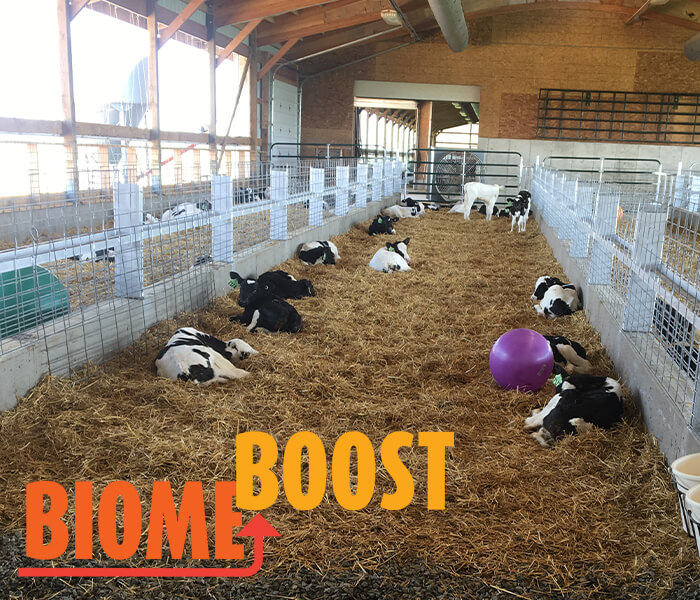
Premier Cooperative has a NEW & IMPROVED calf feed lineup featuring Biome Boost; an exclusive calf feed technology to support the microbiome of the calf. As a part of this new feed lineup, Premier is running the following promotion:
For each ton of
Biome Boost feed that is purchased (18% or 22%) from now until the end of March, the producer will receive a credit back of $20/ton. This would include a current Premier cooperative calf mix that does NOT include Biome Boost as well as competitive calf feeds that are not supplied by Premier Coop. The farm can also feed an 18% and 22% and both would qualify for the $20/ton off.
Bonus Opportunity: An account that starts feeding Biome Boost will also qualify for long-sleeved Biome Boost Shirts & Biome Boost Hats. Quantity to be determined by Premier Cooperative Representative.
In addition to the incentives above, all mini tote & route truck pallet discounts will still qualify!
Learn more about the Biome Boost product here. Contact your local Premier Nutritionist for more information on Biome Boost and this promotion.
Mike Fuller
Purina Dairy Sales Specialist